**Astronomy Picture of the Day**

npub1ap0dw55xedm5w4mkcyq8m7xyluwfc680lywrvfe50vr9ckl5m3uqtf5l75
hex
34f46c28750bd5f3f4a2586568b3d5908aeab2aed6afd05e487aa6ffbb8ad5b9nevent
nevent1qqsrfarv9p6sh40n7j39setgk02epzh2k2hddt7stey84fhlhw9dtwgprpmhxue69uhhyetvv9ujuem4d36kwatvw5hx6mm9qgswshkh22rvka682amvzqralrz078yudrhlj8pkyu68kpjut06dc7qxednedKind-1 (TextNote)
Astronomy Picture of the Day
11 June 2026
The Mermaid Nebula Supernova Remnant
Image: 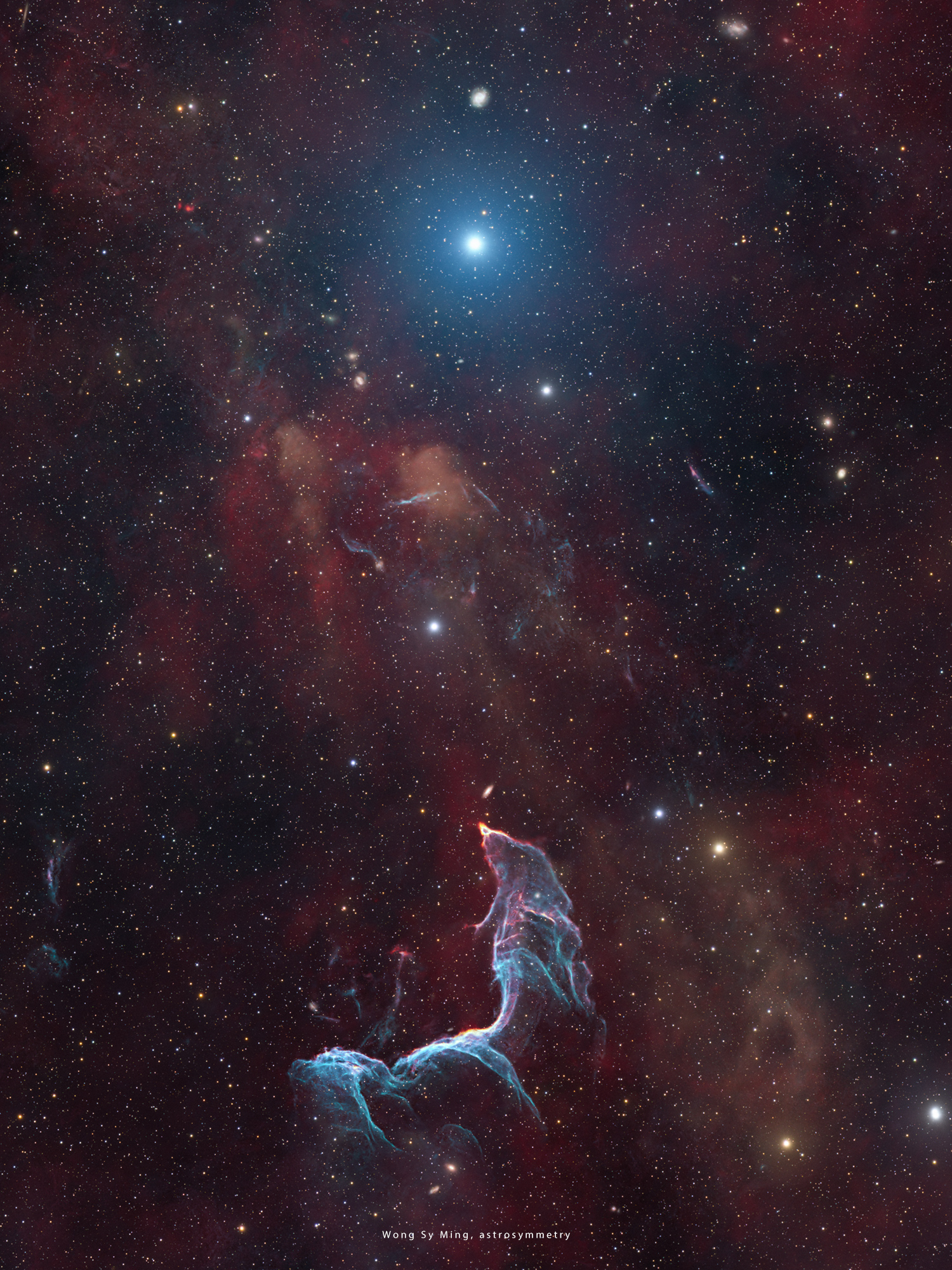
Credit: Not provided
Could the Little Mermaid turn into stardust instead of seafoam? It would seem so in this beautiful nebula . The featured image shows the Mermaid Nebula , also known as the Betta Fish Nebula, which is part of the G296.5+10.0 Supernova Remnant . The blue color visible here originates from doubly ionized oxygen (OIII) , while the deep red is emitted by hydrogen gas . Estimated to be located a few thousand light-years away and about 10,000 years old, this nebula was formed when a massive star exploded as a supernova . It left behind a peculiar pulsar , a young radio-quiet neutron star that spins around about twice every second . The bright stars shown in the image are unassociated with the nebula. The pulsar can be detected in the X-rays but it does not have a confirmed detection in the optical ( visible light ) so far. As a result, the pulsar itself is not visible in this image.
#APOD #Astrophotography #NASA #Cosmos #Astronomy
https://apod.nasa.gov/apod/ap260611.html
原始 JSON
{
  "kind": 1,
  "id": "34f46c28750bd5f3f4a2586568b3d5908aeab2aed6afd05e487aa6ffbb8ad5b9",
  "pubkey": "e85ed75286cb77475776c1007df8c4ff1c9c68eff91c3627347b065c5bf4dc78",
  "created_at": 1781150732,
  "tags": [],
  "content": "**Astronomy Picture of the Day**\n\n11 June 2026\n\n**The Mermaid Nebula Supernova Remnant**\n\nImage: https://apod.nasa.gov/apod/image/2606/Mermaid.jpg\n\nCredit: Not provided\n\nCould the Little Mermaid turn into stardust instead of seafoam? It would seem so in this beautiful nebula . The featured image shows the Mermaid Nebula , also known as the Betta Fish Nebula, which is part of the G296.5+10.0 Supernova Remnant . The blue color visible here originates from doubly ionized oxygen (OIII) , while the deep red is emitted by hydrogen gas . Estimated to be located a few thousand light-years away and about 10,000 years old, this nebula was formed when a massive star exploded as a supernova . It left behind a peculiar pulsar , a young radio-quiet neutron star that spins around about twice every second . The bright stars shown in the image are unassociated with the nebula. The pulsar can be detected in the X-rays but it does not have a confirmed detection in the optical ( visible light ) so far. As a result, the pulsar itself is not visible in this image.\n\n#APOD #Astrophotography #NASA #Cosmos #Astronomy\n\nhttps://apod.nasa.gov/apod/ap260611.html\n",
  "sig": "433e0b108c1a13b69a62777526ff930c09f8b9c3d4c3ebbe4300b601b3bbdf64445e918cc96247bbe18a644b6cf8272f6902f953a47a6ce6400352a0039456b9"
}