**Astronomy Picture of the Day**

npub1ap0dw55xedm5w4mkcyq8m7xyluwfc680lywrvfe50vr9ckl5m3uqtf5l75
hex
47d986b7f12a3d4394cf53bfee0b8346c3d9292b31a50e0a8005a7e05bf6ba29nevent
nevent1qqsy0kvxklcj502rjn8480lwpwp5ds7e9y4nrfgwp2qqtflqt0mt52gprpmhxue69uhhyetvv9ujuem4d36kwatvw5hx6mm9qgswshkh22rvka682amvzqralrz078yudrhlj8pkyu68kpjut06dc7qmpdcleKind-1 (TextNote)
Astronomy Picture of the Day
19 May 2026
NGC 2170: The Angel Nebula
Image: 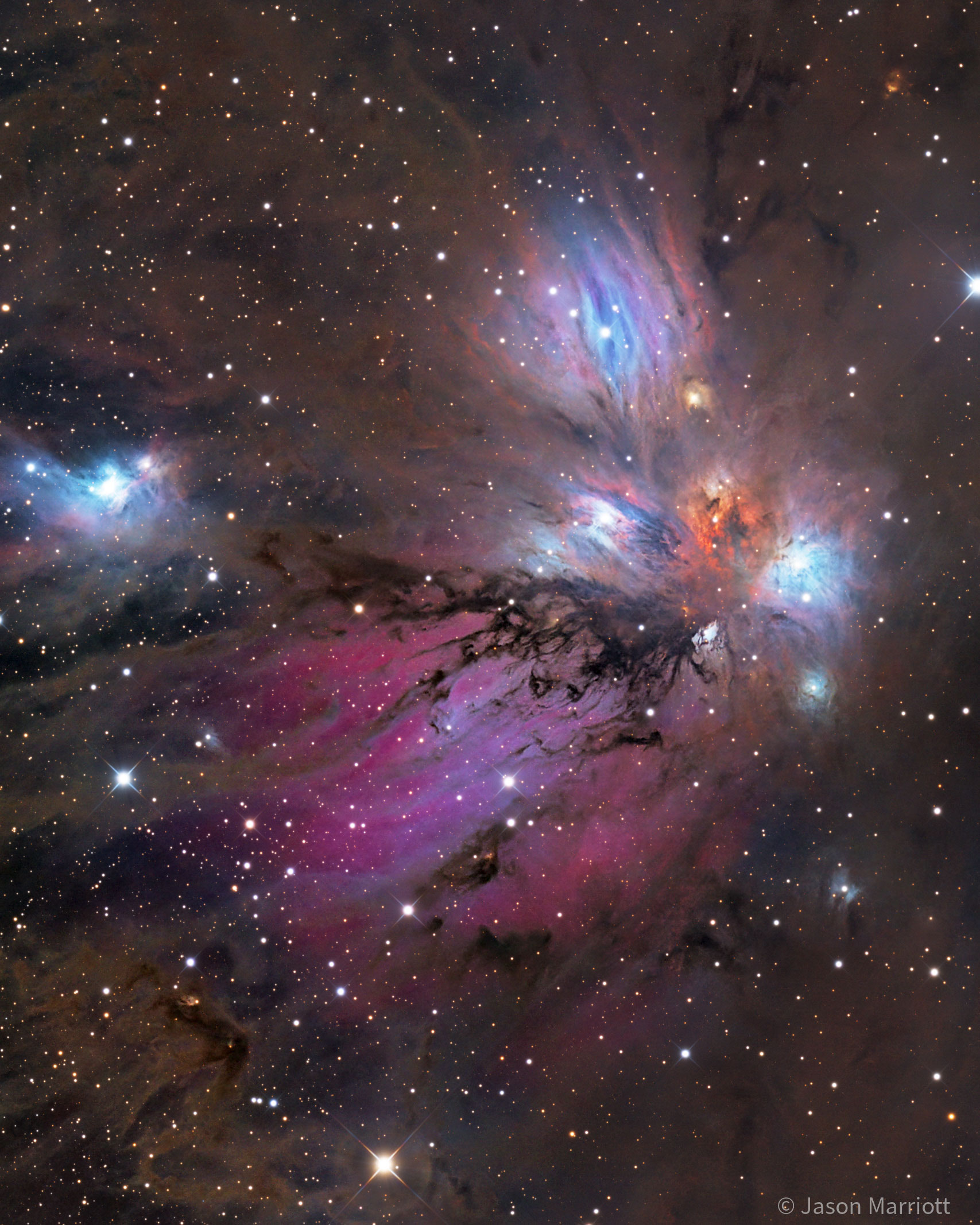
Credit: Not provided
Is this a painting or a photograph? In this celestial abstract art composed with a cosmic brush, dusty nebula NGC 2170 , also known as the Angel Nebula, shines just above the image center. Reflecting the light of nearby hot stars, NGC 2170 is joined by other bluish reflection nebulae, a red emission region, many dark absorption nebulae , and a backdrop of colorful stars . Like the common household items that abstract painters often choose for their subjects, the clouds of gas, dust, and hot stars featured here are also commonly found in a setting like this one -- a massive, star-forming molecular cloud in the constellation of the Unicorn ( Monoceros ). The giant molecular cloud Mon R2 , is impressively close, estimated to be only 2,400 light-years or so away. At that distance, this canvas would be over 60 light-year s across.
#APOD #NGC2170 #AngelNebula #Monoceros #MonR2 #ReflectionNebula
https://apod.nasa.gov/apod/ap260519.html
原始 JSON
{
  "kind": 1,
  "id": "47d986b7f12a3d4394cf53bfee0b8346c3d9292b31a50e0a8005a7e05bf6ba29",
  "pubkey": "e85ed75286cb77475776c1007df8c4ff1c9c68eff91c3627347b065c5bf4dc78",
  "created_at": 1779163768,
  "tags": [],
  "content": "**Astronomy Picture of the Day**\n\n19 May 2026\n\n**NGC 2170: The Angel Nebula**\n\nImage: https://apod.nasa.gov/apod/image/2605/Angel_Marriott_1707.jpg\n\nCredit: Not provided\n\nIs this a painting or a photograph? In this celestial abstract art composed with a cosmic brush, dusty nebula NGC 2170 , also known as the Angel Nebula, shines just above the image center. Reflecting the light of nearby hot stars, NGC 2170 is joined by other bluish reflection nebulae, a red emission region, many dark absorption nebulae , and a backdrop of colorful stars . Like the common household items that abstract painters often choose for their subjects, the clouds of gas, dust, and hot stars featured here are also commonly found in a setting like this one -- a massive, star-forming molecular cloud in the constellation of the Unicorn ( Monoceros ). The giant molecular cloud Mon R2 , is impressively close, estimated to be only 2,400 light-years or so away. At that distance, this canvas would be over 60 light-year s across.\n\n#APOD #NGC2170 #AngelNebula #Monoceros #MonR2 #ReflectionNebula\n\nhttps://apod.nasa.gov/apod/ap260519.html\n",
  "sig": "28c81da934464c1e4c10f9d0261022495c32887937caecf72ec9ae8544b298760d3bb075a931dc6c618243920b11e62e2545cf2a2372901694cf562ecbcaa7ae"
}