**Astronomy Picture of the Day**

npub1ap0dw55xedm5w4mkcyq8m7xyluwfc680lywrvfe50vr9ckl5m3uqtf5l75
hex
4e80a4a7b87c6dbdfc68cc042cbab7c26b4e4bdae5b4b5e71650e73186b00f57nevent
nevent1qqsyaq9y57u8cmdal35vcppvh2muy66wf0dwtd94uut9pee3s6cq74cprpmhxue69uhhyetvv9ujuem4d36kwatvw5hx6mm9qgswshkh22rvka682amvzqralrz078yudrhlj8pkyu68kpjut06dc7qqa8xumKind-1 (TextNote)
Astronomy Picture of the Day
13 May 2026
NGC 188: Old Cluster in the New General Catalog
Image: 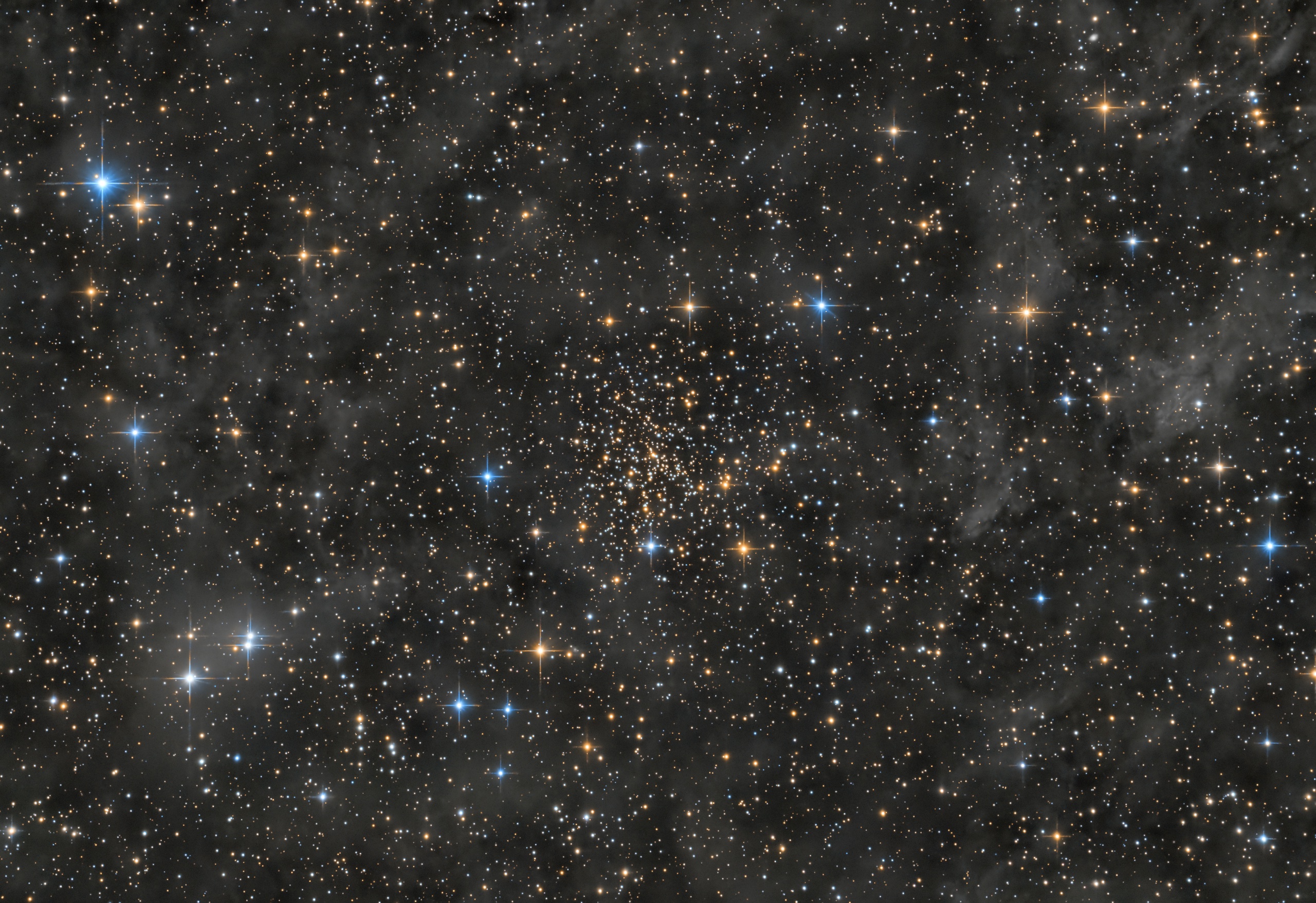
Credit: Not provided
The New General Catalog of star clusters and nebulae really isn't so new. In fact, it was published in 1888 - an effort by J. L. E. Dreyer to consolidate the work of astronomers William , Caroline , and John Herschel along with others into a useful single, complete catalog of astronomical discoveries and measurements. Dreyer's work was largely successful and is still important today, as this famous catalog continues to lend its "NGC" to bright clusters, galaxies, and nebulae. Take for example the star cluster known as NGC 188 (item number 188 in the NGC compilation). It lies about 6,000 light-years distant in the northern constellation Cepheus and represents a galactic or open star cluster . With an age of about 7 billion years, NGC 188 is old for an open cluster. Its old, evolved red giant stars have yellowish hues in this colorful, deep sky view . NGC 188 also enjoys the designation Caldwell 1 in a modern compilation of deep sky objects. Located well above the plane of the Milky Way and seen in the direction of planet Earth's north celestial pole, the ancient stellar group is known to some as the Polarissima Cluster .
#APOD #NGC188 #StarCluster #OpenCluster #Cepheus #Stargazing
https://apod.nasa.gov/apod/ap260513.html
原始 JSON
{
  "kind": 1,
  "id": "4e80a4a7b87c6dbdfc68cc042cbab7c26b4e4bdae5b4b5e71650e73186b00f57",
  "pubkey": "e85ed75286cb77475776c1007df8c4ff1c9c68eff91c3627347b065c5bf4dc78",
  "created_at": 1778645245,
  "tags": [],
  "content": "**Astronomy Picture of the Day**\n\n13 May 2026\n\n**NGC 188: Old Cluster in the New General Catalog**\n\nImage: https://apod.nasa.gov/apod/image/2605/Polarissima.jpg\n\nCredit: Not provided\n\nThe New General Catalog of star clusters and nebulae really isn't so new. In fact, it was published in 1888 - an effort by J. L. E. Dreyer to consolidate the work of astronomers William , Caroline , and John Herschel along with others into a useful single, complete catalog of astronomical discoveries and measurements. Dreyer's work was largely successful and is still important today, as this famous catalog continues to lend its \"NGC\" to bright clusters, galaxies, and nebulae. Take for example the star cluster known as NGC 188 (item number 188 in the NGC compilation). It lies about 6,000 light-years distant in the northern constellation Cepheus and represents a galactic or open star cluster . With an age of about 7 billion years, NGC 188 is old for an open cluster. Its old, evolved red giant stars have yellowish hues in this colorful, deep sky view . NGC 188 also enjoys the designation Caldwell 1 in a modern compilation of deep sky objects. Located well above the plane of the Milky Way and seen in the direction of planet Earth's north celestial pole, the ancient stellar group is known to some as the Polarissima Cluster .\n\n#APOD #NGC188 #StarCluster #OpenCluster #Cepheus #Stargazing\n\nhttps://apod.nasa.gov/apod/ap260513.html\n",
  "sig": "d14a5c0eefee1ecfb1e04fb3f1246f51464c27bd9d37ffd928a8e093dca34abe63a807fa15b5ffb28c46b3fe926c0974c3899bbee590f23432661b91d5565460"
}