**Astronomy Picture of the Day**

npub1ap0dw55xedm5w4mkcyq8m7xyluwfc680lywrvfe50vr9ckl5m3uqtf5l75
hex
6f7c5217cdcd0a8cbeb01f37a68f9881653ff99cfe7dd87db29c8e329fc0ebeanevent
nevent1qqsx7lzjzlxu6z5vh6cp7dax37vgzefllxw0ulwc0kefer3jnlqwh6sprpmhxue69uhhyetvv9ujuem4d36kwatvw5hx6mm9qgswshkh22rvka682amvzqralrz078yudrhlj8pkyu68kpjut06dc7qxtye7eKind-1 (TextNote)
Astronomy Picture of the Day
28 May 2026
NGC 1514: The Crystal Ball Nebula
Image: 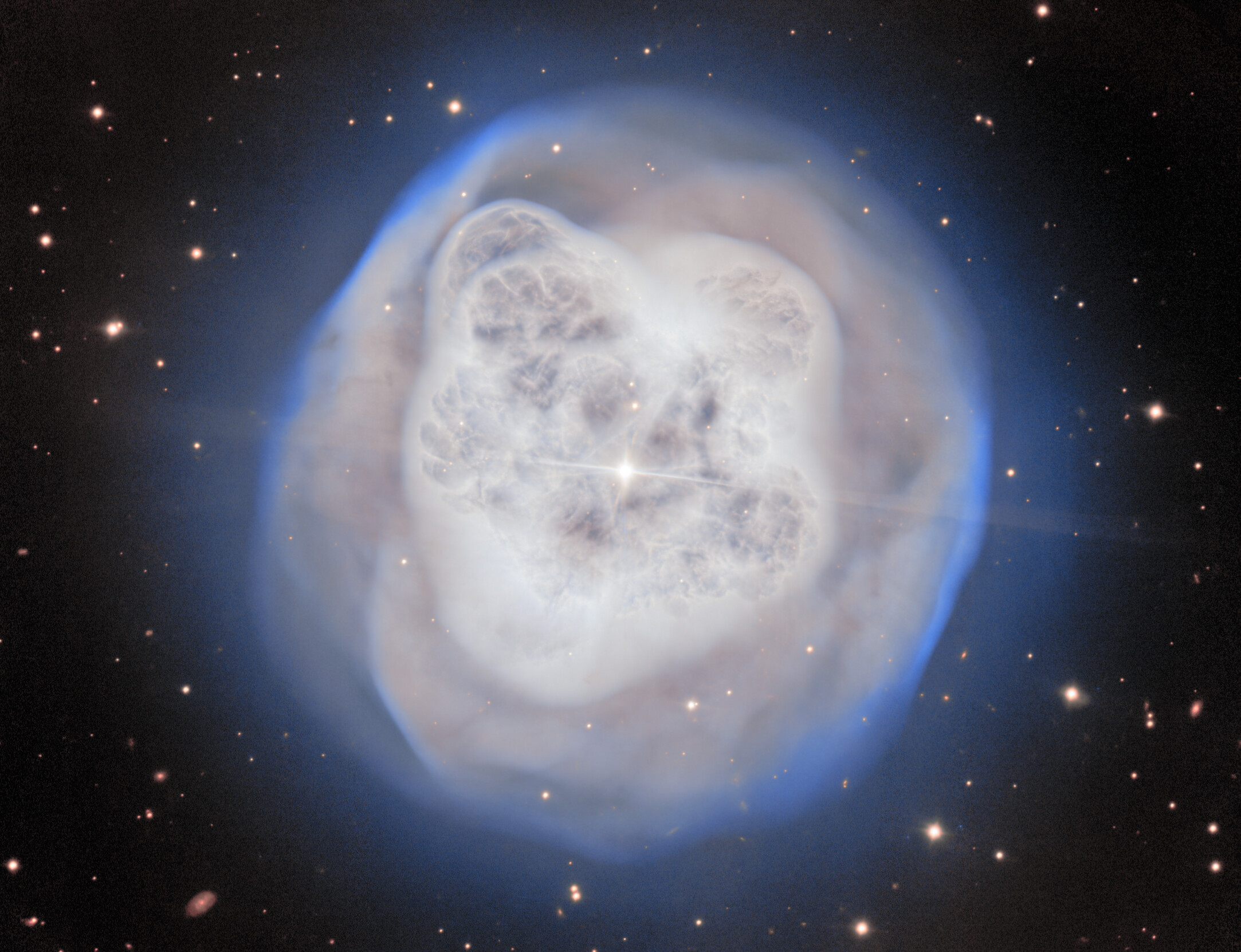
Image Credit: International Gemini Observatory / NOIRLab / NSF / AURA ; Image Processing: J. Miller & M. Rodriguez ( International Gemini Observatory / NSF NOIRLab ), T.A. Rector ( University of Alaska Anchorage / NSF NOIRLab ), D. de Martin & M. Zamani ( NSF NOIRLab ) Text: Cecilia Chirenti ( NASA GSFC , UMCP , CRESST II )
What do you see in this crystal ball? The featured image shows NGC 1514 , known as the Crystal Ball Nebula , observed by the Gemini North telescope on Maunakea , in Hawai'i . NGC 1514 is 1,500 light-years away and was discovered by William Herschel in 1790. This planetary nebula is formed when a star becomes a red giant and ejects its outer gas layers. The ejected shell of gas is heated up by the core of the star to temperatures hotter than the surface of our Sun : that makes the gas shine, creating beautiful images like this one. The slightly asymmetrical shape of the Crystal Ball Nebula reveals a secret: the bright star in the center has a companion. As the two stars orbit each other with a period of about nine years , they shape the gas around them. In about 10,000 - 25,000 years the nebula will be dissipated by their stellar winds.
#APOD #Astrophoto #Cosmos #Science #Space
https://apod.nasa.gov/apod/ap260528.html
原始 JSON
{
  "kind": 1,
  "id": "6f7c5217cdcd0a8cbeb01f37a68f9881653ff99cfe7dd87db29c8e329fc0ebea",
  "pubkey": "e85ed75286cb77475776c1007df8c4ff1c9c68eff91c3627347b065c5bf4dc78",
  "created_at": 1779941165,
  "tags": [],
  "content": "**Astronomy Picture of the Day**\n\n28 May 2026\n\n**NGC 1514: The Crystal Ball Nebula**\n\nImage: https://apod.nasa.gov/apod/image/2605/noirlab2613a_large.jpg\n\nImage Credit: International Gemini Observatory / NOIRLab / NSF / AURA ; Image Processing: J. Miller \u0026 M. Rodriguez ( International Gemini Observatory / NSF NOIRLab ), T.A. Rector ( University of Alaska Anchorage / NSF NOIRLab ), D. de Martin \u0026 M. Zamani ( NSF NOIRLab ) Text: Cecilia Chirenti ( NASA GSFC , UMCP , CRESST II )\n\nWhat do you see in this crystal ball? The featured image shows NGC 1514 , known as the Crystal Ball Nebula , observed by the Gemini North telescope on Maunakea , in Hawai'i . NGC 1514 is 1,500 light-years away and was discovered by William Herschel in 1790. This planetary nebula is formed when a star becomes a red giant and ejects its outer gas layers. The ejected shell of gas is heated up by the core of the star to temperatures hotter than the surface of our Sun : that makes the gas shine, creating beautiful images like this one. The slightly asymmetrical shape of the Crystal Ball Nebula reveals a secret: the bright star in the center has a companion. As the two stars orbit each other with a period of about nine years , they shape the gas around them. In about 10,000 - 25,000 years the nebula will be dissipated by their stellar winds.\n\n#APOD #Astrophoto #Cosmos #Science #Space\n\nhttps://apod.nasa.gov/apod/ap260528.html\n",
  "sig": "1e27b4e08c3c0b9488fb5e20cc0db9c98b6ff091cf2659bfc8bd94e716f3c5a35d607a1209c13d06698e27da01a2f512ba4018684c72a3675ceb8b36dbd9cc85"
}