**Astronomy Picture of the Day**

npub1ap0dw55xedm5w4mkcyq8m7xyluwfc680lywrvfe50vr9ckl5m3uqtf5l75
hex
ff303fa08f803426b33539f48682b66b63b87098949d6661a7563c4b39a74814nevent
nevent1qqs07vpl5z8cqdpxkv6nnayxs2mxkcacwzvff8txvxn4v0zt8xn5s9qprpmhxue69uhhyetvv9ujuem4d36kwatvw5hx6mm9qgswshkh22rvka682amvzqralrz078yudrhlj8pkyu68kpjut06dc7qkcqearKind-1 (TextNote)
Astronomy Picture of the Day
17 June 2026
Longmore 8: The Hamster Wheel Nebula
Image: 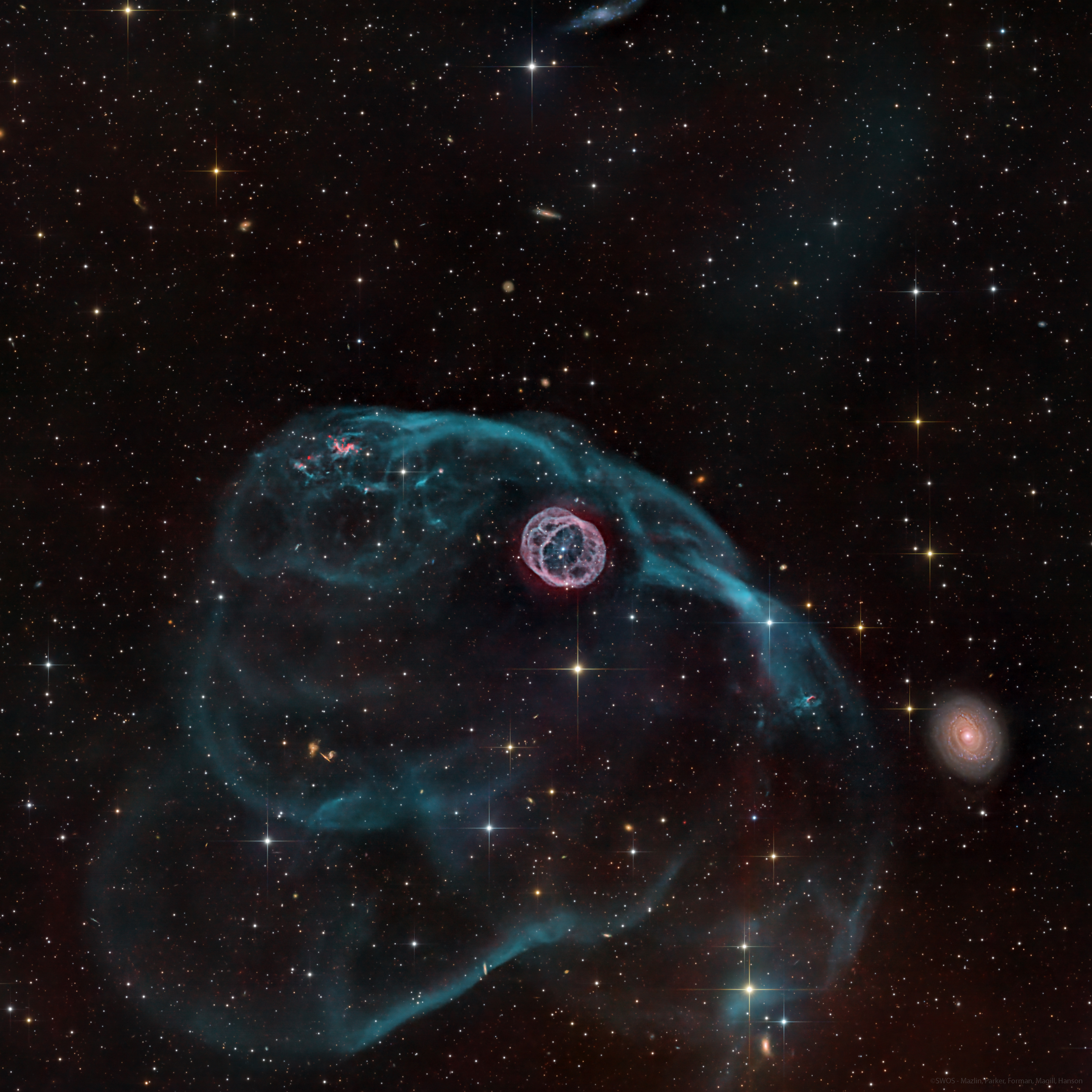
Credit: Not provided
How did a hamster wheel get into space? The Hamster Wheel Nebula (Longmore 8) was discovered by Andrew Longmore in 1976 as a part of a larger survey of the southern sky. This survey employed several improvements in photographic technology , including the use of highly sensitive film , to capture deeper and fainter objects on plates that were examined by eye and catalogued. The featured image , taken at Observatorio El Sauce in Chile, depicts an intricate wheel structure of glowing hydrogen that was thrown out into space by a dying star and ionized by the leftover white dwarf . This structure was barely visible on the original plate, emphasizing the power of modern telescopes and cameras. Two opposing clumps of red hydrogen gas encased in the blue veil of ionized oxygen hint at the presence of a companion to the bright white dwarf at the wheel’s center!
#APOD #Astrophotography #Universe #Space #Astronomy
https://apod.nasa.gov/apod/ap260617.html
原始 JSON
{
  "kind": 1,
  "id": "ff303fa08f803426b33539f48682b66b63b87098949d6661a7563c4b39a74814",
  "pubkey": "e85ed75286cb77475776c1007df8c4ff1c9c68eff91c3627347b065c5bf4dc78",
  "created_at": 1781669137,
  "tags": [],
  "content": "**Astronomy Picture of the Day**\n\n17 June 2026\n\n**Longmore 8: The Hamster Wheel Nebula**\n\nImage: https://apod.nasa.gov/apod/image/2606/hamster.jpg\n\nCredit: Not provided\n\nHow did a hamster wheel get into space? The Hamster Wheel Nebula (Longmore 8) was discovered by Andrew Longmore in 1976 as a part of a larger survey of the southern sky. This survey employed several improvements in photographic technology , including the use of highly sensitive film , to capture deeper and fainter objects on plates that were examined by eye and catalogued. The featured image , taken at Observatorio El Sauce in Chile, depicts an intricate wheel structure of glowing hydrogen that was thrown out into space by a dying star and ionized by the leftover white dwarf . This structure was barely visible on the original plate, emphasizing the power of modern telescopes and cameras. Two opposing clumps of red hydrogen gas encased in the blue veil of ionized oxygen hint at the presence of a companion to the bright white dwarf at the wheel’s center!\n\n#APOD #Astrophotography #Universe #Space #Astronomy\n\nhttps://apod.nasa.gov/apod/ap260617.html\n",
  "sig": "ad7bc3640eee21a1db21bf99ca0f966ed3cabbd6926f3302e177d05068513bd05044e4e663b6c7e3fb50c687580e1f1ff8f2fcf46b29bf0a0c5984fc41545746"
}