**Astronomy Picture of the Day**

npub1ap0dw55xedm5w4mkcyq8m7xyluwfc680lywrvfe50vr9ckl5m3uqtf5l75
hex
0046a1fd18d33cdc7c10f1303fccb95e126a990a7852737c4e14642e4ce32df9nevent
nevent1qqsqq34pl5vdx0xu0sg0zvpleju4uyn2ny98s5nn038pgepwfn3jm7gprpmhxue69uhhyetvv9ujuem4d36kwatvw5hx6mm9qgswshkh22rvka682amvzqralrz078yudrhlj8pkyu68kpjut06dc7qq0g20lKind-1 (TextNote)
Astronomy Picture of the Day
04 June 2026
A Planetary Nebula with Cosmic Buckyballs
Image: 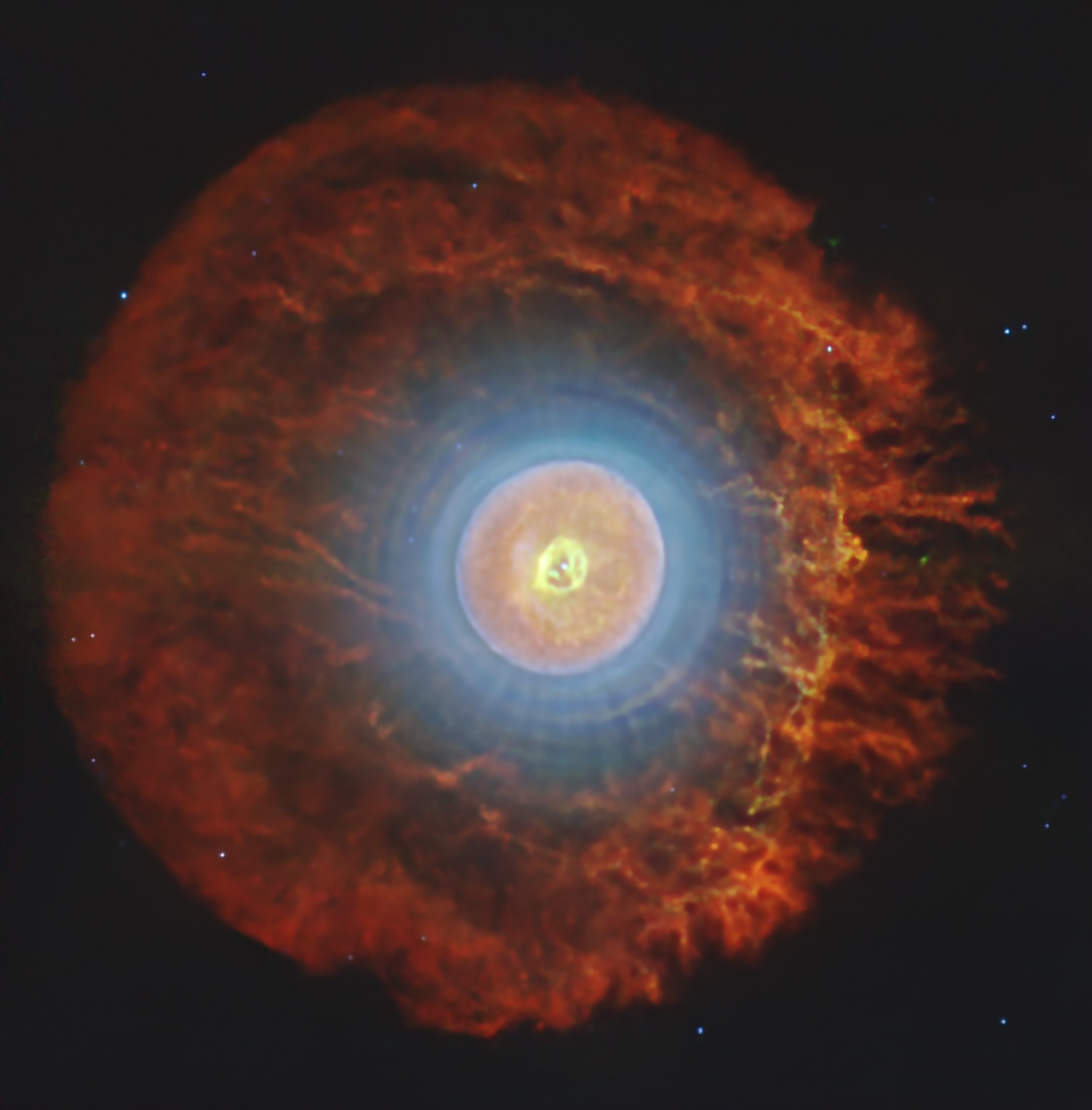
Image Credit: NASA / ESA / CSA / J. Cami ( Western University ); Image Processing: K. Beecroft Text: Jan Cami ( Western University ) & Cecilia Chirenti ( NASA GSFC , UMCP , CRESST II )
What is happening inside this unusual nebula? Planetary nebula Tc 1 , captured here in exquisite detail by the James Webb Space Telescope , is the celestial site where buckyballs were first identified in 2010. Buckminsterfullerene — as buckyballs are officially called — is a molecule with 60 carbon atoms (C 60 ) arranged in the shape of a soccer ball . The molecule is named for architect Buckminster Fuller because of its resemblance to the geodesic dome he helped popularize. Webb’s new data reveal where the C 60 molecules live in this nebula, and the geometry is striking: they populate a thin spherical shell around the central star, visible here as the bright edge of the nebula’s glowing orange central region. Look closely near the nebula’s heart and a more perplexing feature emerges: a delicate structure shaped uncannily like an upside-down question mark , fitting punctuation for the many questions this nebula still poses.
#APOD #Astrophotography #lookUp #Science #Astronomy
https://apod.nasa.gov/apod/ap260604.html
原始 JSON
{
  "kind": 1,
  "id": "0046a1fd18d33cdc7c10f1303fccb95e126a990a7852737c4e14642e4ce32df9",
  "pubkey": "e85ed75286cb77475776c1007df8c4ff1c9c68eff91c3627347b065c5bf4dc78",
  "created_at": 1780546195,
  "tags": [],
  "content": "**Astronomy Picture of the Day**\n\n04 June 2026\n\n**A Planetary Nebula with Cosmic Buckyballs**\n\nImage: https://apod.nasa.gov/apod/image/2606/buckyballs.jpg\n\nImage Credit: NASA / ESA / CSA / J. Cami ( Western University ); Image Processing: K. Beecroft Text: Jan Cami ( Western University ) \u0026 Cecilia Chirenti ( NASA GSFC , UMCP , CRESST II )\n\nWhat is happening inside this unusual nebula? Planetary nebula Tc 1 , captured here in exquisite detail by the James Webb Space Telescope , is the celestial site where buckyballs were first identified in 2010. Buckminsterfullerene — as buckyballs are officially called — is a molecule with 60 carbon atoms (C 60 ) arranged in the shape of a soccer ball . The molecule is named for architect Buckminster Fuller because of its resemblance to the geodesic dome he helped popularize. Webb’s new data reveal where the C 60 molecules live in this nebula, and the geometry is striking: they populate a thin spherical shell around the central star, visible here as the bright edge of the nebula’s glowing orange central region. Look closely near the nebula’s heart and a more perplexing feature emerges: a delicate structure shaped uncannily like an upside-down question mark , fitting punctuation for the many questions this nebula still poses.\n\n#APOD #Astrophotography #lookUp #Science #Astronomy\n\nhttps://apod.nasa.gov/apod/ap260604.html\n",
  "sig": "e003777a727aa001d0ac249ffe68a7165975ba6cb867bb1f7920fcf6119b029b4e1703ef25659975a0537f48ea77d03d9b6876cbd433219f4883f4b24b8e86e4"
}