**Astronomy Picture of the Day**

npub1ap0dw55xedm5w4mkcyq8m7xyluwfc680lywrvfe50vr9ckl5m3uqtf5l75
hex
01c647528a597c01950d68289cecc041257408de0a82a29864890313c6046d43nevent
nevent1qqsqr3j82299jlqpj5xks2yuanqyzft5pr0q4q4znpjgjqcncczx6scprpmhxue69uhhyetvv9ujuem4d36kwatvw5hx6mm9qgswshkh22rvka682amvzqralrz078yudrhlj8pkyu68kpjut06dc7qfklwzvKind-1 (TextNote)
Astronomy Picture of the Day
30 May 2026
Supermoon Versus Micromoon
Image: 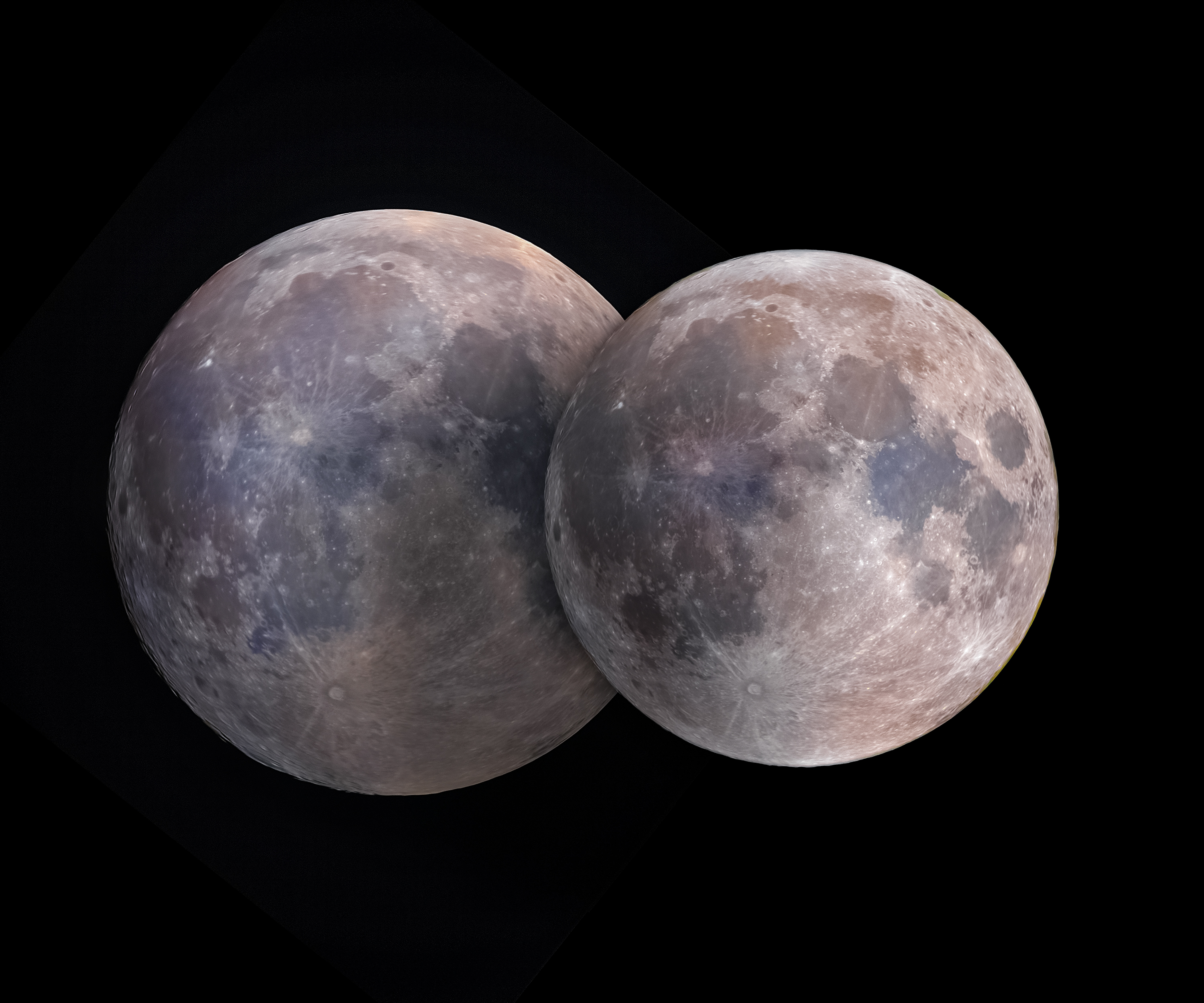
Image Credit: Soumyadeep Mukherjee
What is so micro about tonight's blue micromoon? Just after sunset, a full moon will appear slightly smaller and dimmer than usual. The reason is that the Moon's fully illuminated phase occurs within a short time of apogee - when the Moon is farthest from the Earth in its elliptical orbit . In fact, tonight's micromoon will be the farthest, smallest, and dimmest Moon this year. But tonight's micromoon is notable for yet another reason: it is also a blue moon , meaning that it is the second full moon in the same month ( moon-th ). Pictured here , a supermoon -- when the full moon appears near its largest -- is compared to a micromoon as photographed from Kolkata , India in May and December of 2021. Although the next micromoon occurs next month, and the next blue moon at the end of 2028, the next blue micromoon will not occur until 2053 .
#APOD #supermoon #micromoon #bluemoon #lunarphase #lunarcycle
https://apod.nasa.gov/apod/ap260530.html
原始 JSON
{
  "kind": 1,
  "id": "01c647528a597c01950d68289cecc041257408de0a82a29864890313c6046d43",
  "pubkey": "e85ed75286cb77475776c1007df8c4ff1c9c68eff91c3627347b065c5bf4dc78",
  "created_at": 1780113973,
  "tags": [],
  "content": "**Astronomy Picture of the Day**\n\n30 May 2026\n\n**Supermoon Versus Micromoon**\n\nImage: https://apod.nasa.gov/apod/image/2605/SuperMicroMoon_Mukherjee_3000.jpg\n\nImage Credit: Soumyadeep Mukherjee\n\nWhat is so micro about tonight's blue micromoon? Just after sunset, a full moon will appear slightly smaller and dimmer than usual. The reason is that the Moon's fully illuminated phase occurs within a short time of apogee - when the Moon is farthest from the Earth in its elliptical orbit . In fact, tonight's micromoon will be the farthest, smallest, and dimmest Moon this year. But tonight's micromoon is notable for yet another reason: it is also a blue moon , meaning that it is the second full moon in the same month ( moon-th ). Pictured here , a supermoon -- when the full moon appears near its largest -- is compared to a micromoon as photographed from Kolkata , India in May and December of 2021. Although the next micromoon occurs next month, and the next blue moon at the end of 2028, the next blue micromoon will not occur until 2053 .\n\n#APOD #supermoon #micromoon #bluemoon #lunarphase #lunarcycle\n\nhttps://apod.nasa.gov/apod/ap260530.html\n",
  "sig": "2715b7df1af7c229958245b06a5fc13d87a1cac097c5c7fd6ae0d6883d1775b0f08546fc9bb4cd242e7d3dcdf0039fd8f7dd5dceb87c444cf8b830d8f4a06e51"
}