**Astronomy Picture of the Day**

npub1ap0dw55xedm5w4mkcyq8m7xyluwfc680lywrvfe50vr9ckl5m3uqtf5l75
hex
220aa2a1a4dd9f5024a8767293f2e8dd791130b92068df393b079476f0a43824nevent
nevent1qqszyz4z5xjdm86syj58vu5n7t5d67g3xzujq6xl8yas09rk7zjrsfqprpmhxue69uhhyetvv9ujuem4d36kwatvw5hx6mm9qgswshkh22rvka682amvzqralrz078yudrhlj8pkyu68kpjut06dc7q5j069qKind-1 (TextNote)
Astronomy Picture of the Day
27 May 2026
PK 164 +31.1: The Headphone Nebula
Image: 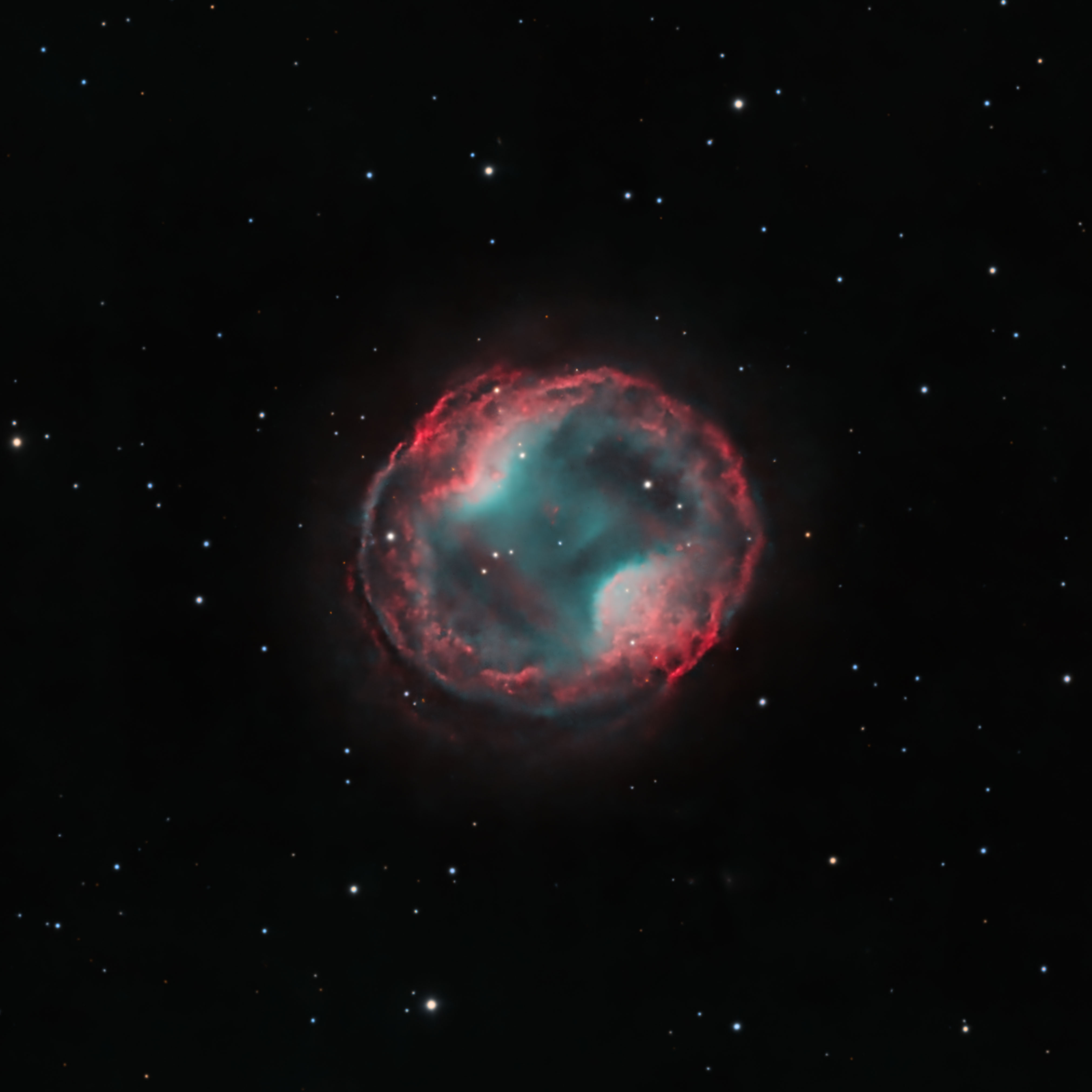
Credit: Not provided
What is a pair of headphones doing in the sky? Today’s image features the Headphone Nebula, also known as PK 164 +31.1 or Jones-Emberson 1 . This planetary nebula , the remnant of a dying Sun-like star, faintly occupies an angular region of the Lynx constellation about 1/5 th the diameter of the full moon. The red and blue-ish green colors trace hydrogen and oxygen atoms, respectively, that have been excited and ionized by the nebula's central white dwarf . The headphone shape, where two lobes of hydrogen puncture the inner region of oxygen, adds this object to a long list of oddly shaped nebulae . The morphology of such strange nebulae hint at the presence of a stellar or planetary companion , which can stir the material flowing out from the dying star. You can listen to Hubble and JWST sonifications of planetary nebulae through your very own headphones!
#APOD #Astrogeek #Astroeducation #Universe #Astronomy
https://apod.nasa.gov/apod/ap260527.html
原始 JSON
{
  "kind": 1,
  "id": "220aa2a1a4dd9f5024a8767293f2e8dd791130b92068df393b079476f0a43824",
  "pubkey": "e85ed75286cb77475776c1007df8c4ff1c9c68eff91c3627347b065c5bf4dc78",
  "created_at": 1779854846,
  "tags": [],
  "content": "**Astronomy Picture of the Day**\n\n27 May 2026\n\n**PK 164 +31.1: The Headphone Nebula**\n\nImage: https://apod.nasa.gov/apod/image/2605/headphone_nebula.jpg\n\nCredit: Not provided\n\nWhat is a pair of headphones doing in the sky? Today’s image features the Headphone Nebula, also known as PK 164 +31.1 or Jones-Emberson 1 . This planetary nebula , the remnant of a dying Sun-like star, faintly occupies an angular region of the Lynx constellation about 1/5 th the diameter of the full moon. The red and blue-ish green colors trace hydrogen and oxygen atoms, respectively, that have been excited and ionized by the nebula's central white dwarf . The headphone shape, where two lobes of hydrogen puncture the inner region of oxygen, adds this object to a long list of oddly shaped nebulae . The morphology of such strange nebulae hint at the presence of a stellar or planetary companion , which can stir the material flowing out from the dying star. You can listen to Hubble and JWST sonifications of planetary nebulae through your very own headphones!\n\n#APOD #Astrogeek #Astroeducation #Universe #Astronomy\n\nhttps://apod.nasa.gov/apod/ap260527.html\n",
  "sig": "9345b8fa963f2c6c173a2095ca2f9673928df1e221062817e877d73e7649b73083f83f8ab942d69dc65c7edda2e36fc3f8d993856ecff95d707c8daac9cde527"
}