**Astronomy Picture of the Day**

npub1ap0dw55xedm5w4mkcyq8m7xyluwfc680lywrvfe50vr9ckl5m3uqtf5l75
hex
4c9f4c9c7f0c1b2f5c2fbb2ee20632fbf0c32eeb32c100d37a6fa8a86bcae0f4nevent
nevent1qqsye86vn3lscxe0tshmkthzqce0huxr9m4n9sgq6daxl29gd09wpaqprpmhxue69uhhyetvv9ujuem4d36kwatvw5hx6mm9qgswshkh22rvka682amvzqralrz078yudrhlj8pkyu68kpjut06dc7q9dr9y5Kind-1 (TextNote)
Astronomy Picture of the Day
18 May 2026
Unraveling NGC 3169
Image: 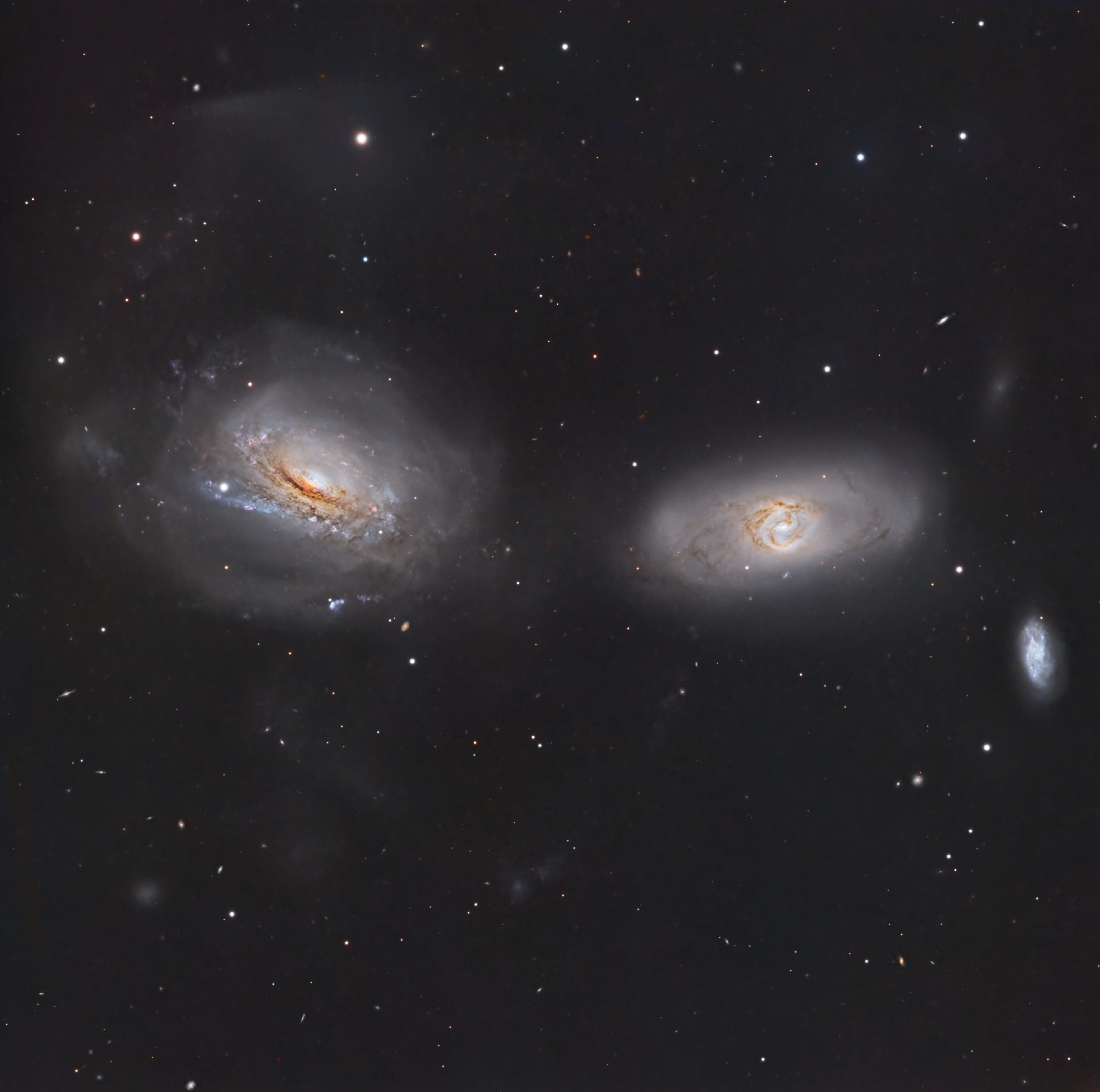
Credit: Not provided
Spiral galaxy NGC 3169 looks to be unraveling like a ball of cosmic yarn. It lies some 70 million light-years away, south of bright star Regulus toward the faint constellation Sextans. Wound up spiral arms are pulled out into sweeping tidal tails as NGC 3169 (left) and neighboring NGC 3166 interact gravitationally . Eventually the galaxies will merge into one, a common fate even for bright galaxies in the local universe . Drawn out stellar arcs and plumes are clear indications of the ongoing gravitational interactions across the deep and colorful galaxy group photo. The telescopic frame spans about 20 arc minutes or about 400,000 light-years at the group's estimated distance, and includes smaller, bluish NGC 3165 to the right. NGC 3169 is also known to shine across the spectrum from radio to X-rays, harboring an active galactic nucleus that is the site of a supermassive black hole.
#APOD #NGC3169 #NGC3166 #NGC3165 #SpiralGalaxy #TidalTails
https://apod.nasa.gov/apod/ap260518.html
原始 JSON
{
  "kind": 1,
  "id": "4c9f4c9c7f0c1b2f5c2fbb2ee20632fbf0c32eeb32c100d37a6fa8a86bcae0f4",
  "pubkey": "e85ed75286cb77475776c1007df8c4ff1c9c68eff91c3627347b065c5bf4dc78",
  "created_at": 1779077392,
  "tags": [],
  "content": "**Astronomy Picture of the Day**\n\n18 May 2026\n\n**Unraveling NGC 3169**\n\nImage: https://apod.nasa.gov/apod/image/2605/ngc3169_ngc3166_ngc3165.jpg\n\nCredit: Not provided\n\nSpiral galaxy NGC 3169 looks to be unraveling like a ball of cosmic yarn. It lies some 70 million light-years away, south of bright star Regulus toward the faint constellation Sextans. Wound up spiral arms are pulled out into sweeping tidal tails as NGC 3169 (left) and neighboring NGC 3166 interact gravitationally . Eventually the galaxies will merge into one, a common fate even for bright galaxies in the local universe . Drawn out stellar arcs and plumes are clear indications of the ongoing gravitational interactions across the deep and colorful galaxy group photo. The telescopic frame spans about 20 arc minutes or about 400,000 light-years at the group's estimated distance, and includes smaller, bluish NGC 3165 to the right. NGC 3169 is also known to shine across the spectrum from radio to X-rays, harboring an active galactic nucleus that is the site of a supermassive black hole.\n\n#APOD #NGC3169 #NGC3166 #NGC3165 #SpiralGalaxy #TidalTails\n\nhttps://apod.nasa.gov/apod/ap260518.html\n",
  "sig": "05da16295a131bb78bbac9b7803c4640331f090e9375bd341f9321b1d920d6081ac5a523a18927f77e6c2c8f6c162a33da11ce1036b05cdf89a645b7051744e0"
}