**Astronomy Picture of the Day**

npub1ap0dw55xedm5w4mkcyq8m7xyluwfc680lywrvfe50vr9ckl5m3uqtf5l75
hex
954760fb0800c683b24a5c6220418786754245c71728f52c9b99cae72512ec03nevent
nevent1qqsf23mqlvyqp35rkf99cc3qgxrcva2zghr3w2849jdenjh8y5fwcqcprpmhxue69uhhyetvv9ujuem4d36kwatvw5hx6mm9qgswshkh22rvka682amvzqralrz078yudrhlj8pkyu68kpjut06dc7qvfwumhKind-1 (TextNote)
Astronomy Picture of the Day
02 June 2026
The Vela Supernova Remnant
Image: 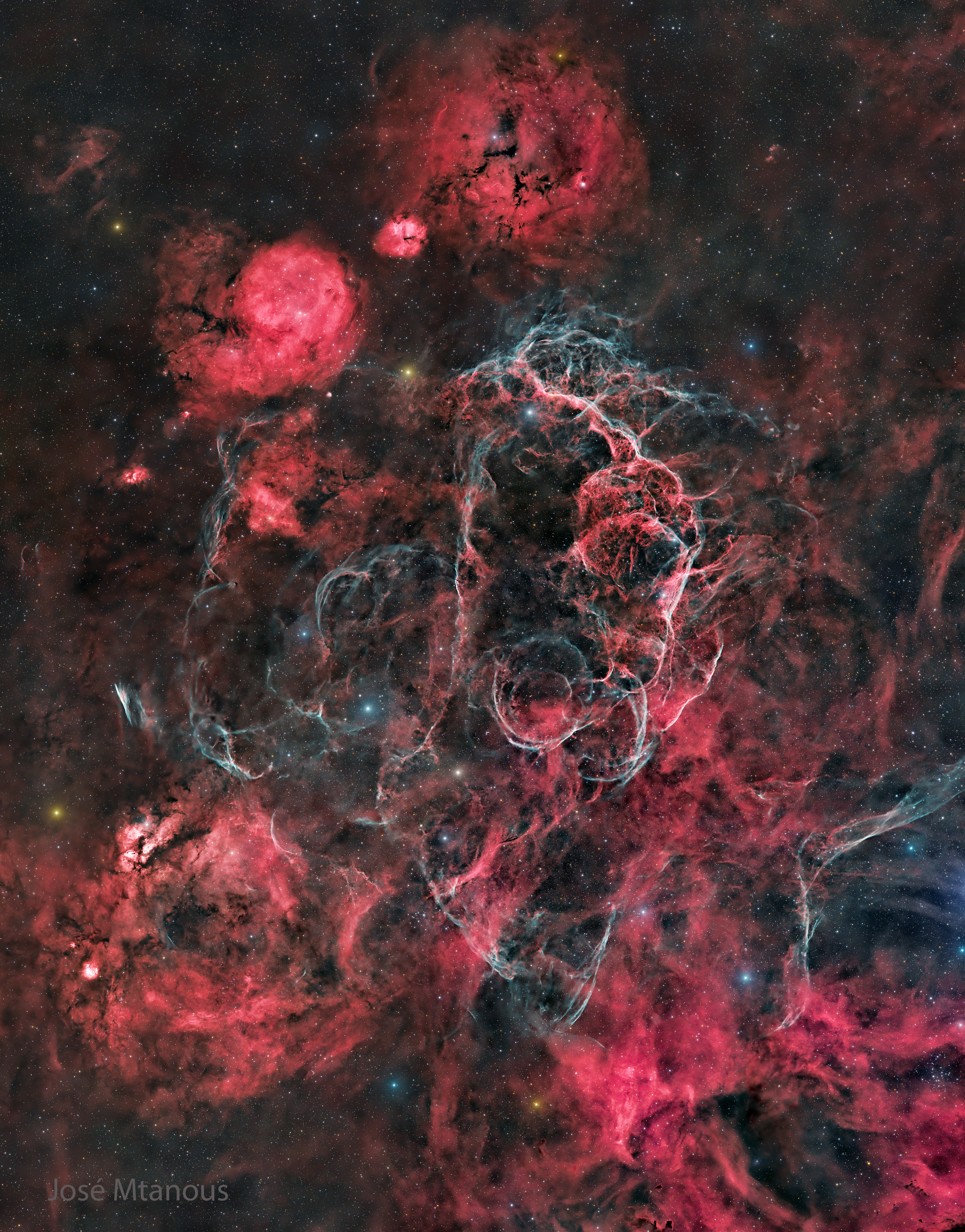
Credit: Not provided
The explosion is over, but the consequences continue. About twelve thousand years ago, a relatively normal star in the constellation Vela suddenly exploded , creating a strange point of light briefly visible to humans living near the beginning of recorded history . The outer layers of the star crashed into the interstellar medium , driving a shock wave that is still visible today. The featured image , taken piecemeal over 60 hours from the Khomas Region of Namibia , captures some of that filamentary and gigantic shock in visible light , with details highlighted by hydrogen (red) and oxygen (blue) emissions. As gas flies away from the detonated star, it decays and reacts with the interstellar medium , producing light in many different colors and energy bands. Remaining at the center of the Vela Supernova Remnant is a pulsar , a star as dense as nuclear matter that spins around more than ten times in a single second.
#APOD #VelaSupernova #VelaSupernovaRemnant #VelaConstellation #SupernovaRemnant #StellarExplosion
https://apod.nasa.gov/apod/ap260602.html
Raw JSON
{
  "kind": 1,
  "id": "954760fb0800c683b24a5c6220418786754245c71728f52c9b99cae72512ec03",
  "pubkey": "e85ed75286cb77475776c1007df8c4ff1c9c68eff91c3627347b065c5bf4dc78",
  "created_at": 1780373400,
  "tags": [],
  "content": "**Astronomy Picture of the Day**\n\n02 June 2026\n\n**The Vela Supernova Remnant**\n\nImage: https://apod.nasa.gov/apod/image/2606/Vela_Mtanous_2900.jpg\n\nCredit: Not provided\n\nThe explosion is over, but the consequences continue. About twelve thousand years ago, a relatively normal star in the constellation Vela suddenly exploded , creating a strange point of light briefly visible to humans living near the beginning of recorded history . The outer layers of the star crashed into the interstellar medium , driving a shock wave that is still visible today. The featured image , taken piecemeal over 60 hours from the Khomas Region of Namibia , captures some of that filamentary and gigantic shock in visible light , with details highlighted by hydrogen (red) and oxygen (blue) emissions. As gas flies away from the detonated star, it decays and reacts with the interstellar medium , producing light in many different colors and energy bands. Remaining at the center of the Vela Supernova Remnant is a pulsar , a star as dense as nuclear matter that spins around more than ten times in a single second.\n\n#APOD #VelaSupernova #VelaSupernovaRemnant #VelaConstellation #SupernovaRemnant #StellarExplosion\n\nhttps://apod.nasa.gov/apod/ap260602.html\n",
  "sig": "b4b85549dc588b61db20751be76b2c66fd12404738993fafab41d8032d95281d18782f76b5b71cb15f96b5417b52368a7023819be6201d9f068a9b5b11cd501e"
}