**Astronomy Picture of the Day**

npub1ap0dw55xedm5w4mkcyq8m7xyluwfc680lywrvfe50vr9ckl5m3uqtf5l75
hex
9b4f0c2222b243836f25ebb0a3cec80c3f533dc6bd8f9750e31799ce26244f7cnevent
nevent1qqsfkncvyg3tysurduj7hv9remyqc06n8hrtmruh2r330xwwycjy7lqprpmhxue69uhhyetvv9ujuem4d36kwatvw5hx6mm9qgswshkh22rvka682amvzqralrz078yudrhlj8pkyu68kpjut06dc7qxd3h7hKind-1 (TextNote)
Astronomy Picture of the Day
16 May 2026
Aurora Slathers Up the Sky
Image: 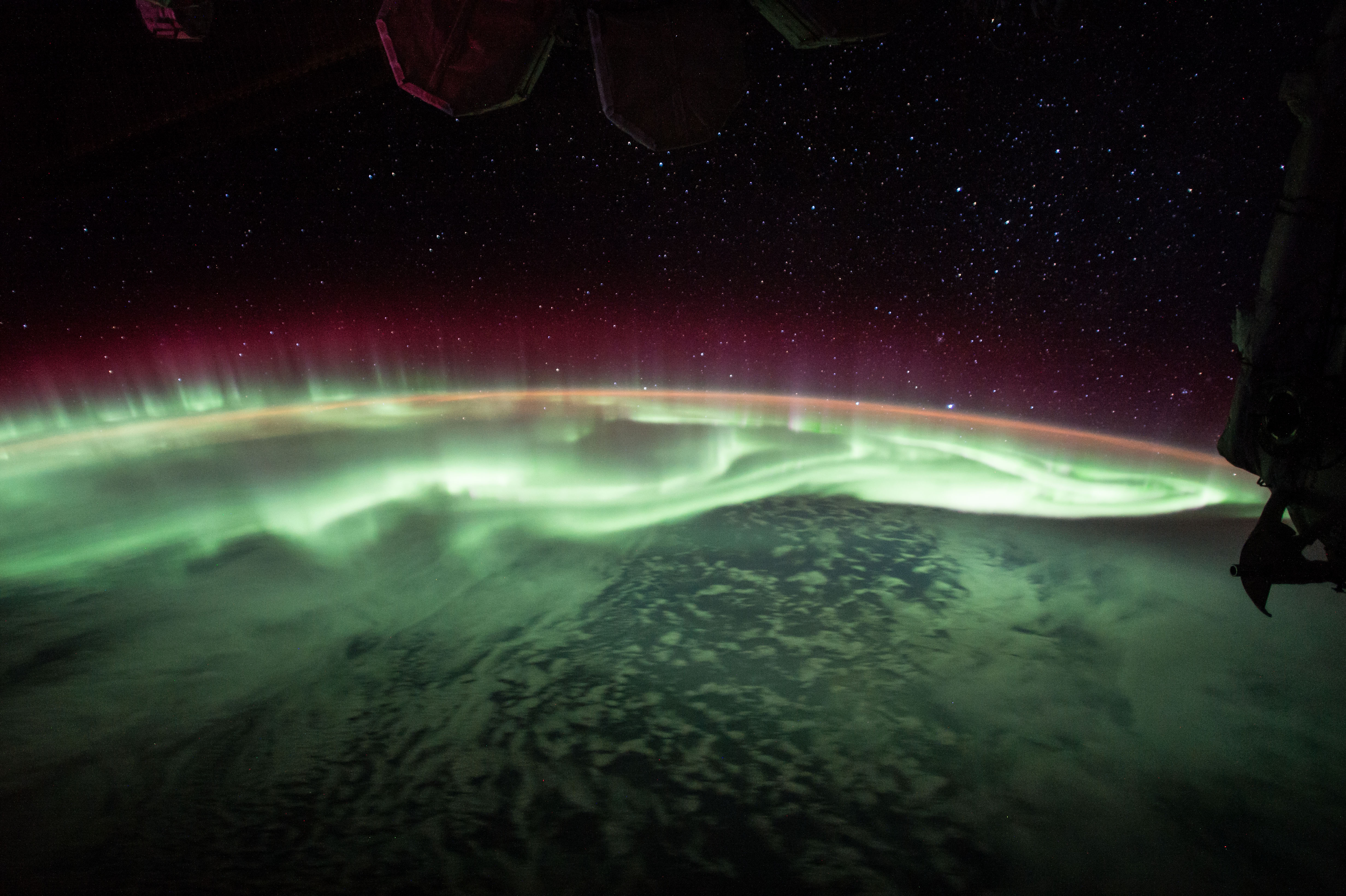
Image Credit: Jack Fischer , Expedition 52 , NASA
Like salsa verde on your favorite burrito, a green aurora slathers up the sky in this 2017 June 25 snapshot from the International Space Station. About 400 kilometers (250 miles) above Earth, the orbiting station is itself within the upper realm of the auroral displays. Aurorae have the signature colors of excited molecules and atoms at the low densities found at extreme altitudes. Emission from atomic oxygen dominates this view. The tantalizing glow is green at lower altitudes, but rarer reddish bands extend above the space station's horizon. The orbital scene was captured while passing over a point south and east of Australia, with stars above the horizon at the right belonging to the constellation Canis Major , Orion's big dog. Sirius , alpha star of Canis Major, is the brightest star near the Earth's limb.
#APOD #Aurora #AuroraBorealis #ISS #SpaceStation #SpacePhotography
https://apod.nasa.gov/apod/ap260516.html
Raw JSON
{
  "kind": 1,
  "id": "9b4f0c2222b243836f25ebb0a3cec80c3f533dc6bd8f9750e31799ce26244f7c",
  "pubkey": "e85ed75286cb77475776c1007df8c4ff1c9c68eff91c3627347b065c5bf4dc78",
  "created_at": 1778904579,
  "tags": [],
  "content": "**Astronomy Picture of the Day**\n\n16 May 2026\n\n**Aurora Slathers Up the Sky**\n\nImage: https://apod.nasa.gov/apod/image/2605/aurora_iss052e007857.jpg\n\nImage Credit: Jack Fischer , Expedition 52 , NASA\n\nLike salsa verde on your favorite burrito, a green aurora slathers up the sky in this 2017 June 25 snapshot from the International Space Station. About 400 kilometers (250 miles) above Earth, the orbiting station is itself within the upper realm of the auroral displays. Aurorae have the signature colors of excited molecules and atoms at the low densities found at extreme altitudes. Emission from atomic oxygen dominates this view. The tantalizing glow is green at lower altitudes, but rarer reddish bands extend above the space station's horizon. The orbital scene was captured while passing over a point south and east of Australia, with stars above the horizon at the right belonging to the constellation Canis Major , Orion's big dog. Sirius , alpha star of Canis Major, is the brightest star near the Earth's limb.\n\n#APOD #Aurora #AuroraBorealis #ISS #SpaceStation #SpacePhotography\n\nhttps://apod.nasa.gov/apod/ap260516.html\n",
  "sig": "c3fe4a266cf3e32ae7c8afa6d02cbf58ff987073fd451144e1b32f1bbb01fd3de42f05a2f66b84ed59c1e431e2759333993cfa275d32788d07eb48504efc60ae"
}