**Astronomy Picture of the Day**

npub1ap0dw55xedm5w4mkcyq8m7xyluwfc680lywrvfe50vr9ckl5m3uqtf5l75
hex
d4c7be83e9f60e5799cdf904ebece60d0ba66c45f116617d4f370244be09e86enevent
nevent1qqsdf3a7s05lvrjhn8xljp8tannq6zaxd3zlz9np048nwqjyhcy7smsprpmhxue69uhhyetvv9ujuem4d36kwatvw5hx6mm9qgswshkh22rvka682amvzqralrz078yudrhlj8pkyu68kpjut06dc7q40zanzKind-1 (TextNote)
Astronomy Picture of the Day
10 May 2026
Comet R3 PanSTARRS and Orion
Image: 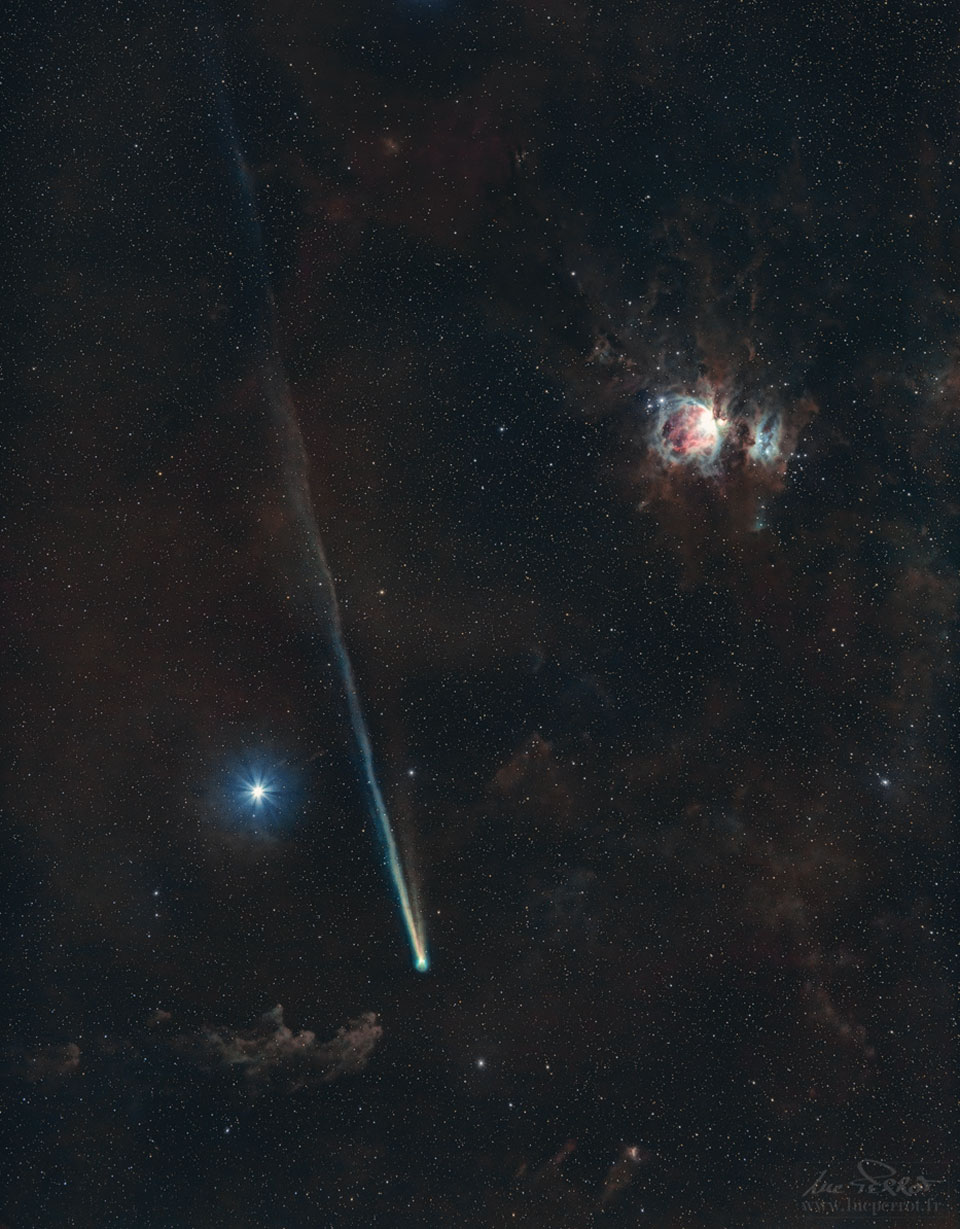
Credit: Not provided
Orion never had a sword like this. As Comet C/2025 R3 (PanSTARRS) heads out of the inner Solar System, it is putting on quite a show for long exposure cameras . Currently seen toward the constellation of Orion the Hunter , the distant Orion Nebula is visible on the upper right. Comet R3 PanSTARRS is now showing two distinct tails : a short dust tail pointing toward the top of the image and a long and wavy ion tail trailing off toward the upper left. The ion tail points away from the Sun and glows blue from excited carbon monoxide . Large particles in the dust tail somewhat resist the radiation pressure that push them away from the Sun and so retain a bit of the comet's orbit. The dust tail shines by reflected sunlight . The featured image was taken a few days ago from France 's Reunion Island in the southern Indian Ocean .
#APOD #CometR3 #PanSTARRS #CometC2025R3 #Orion #OrionNebula
https://apod.nasa.gov/apod/ap260510.html
原始 JSON
{
  "kind": 1,
  "id": "d4c7be83e9f60e5799cdf904ebece60d0ba66c45f116617d4f370244be09e86e",
  "pubkey": "e85ed75286cb77475776c1007df8c4ff1c9c68eff91c3627347b065c5bf4dc78",
  "created_at": 1778386195,
  "tags": [],
  "content": "**Astronomy Picture of the Day**\n\n10 May 2026\n\n**Comet R3 PanSTARRS and Orion**\n\nImage: https://apod.nasa.gov/apod/image/2605/CometOrion_Perrot_960.jpg\n\nCredit: Not provided\n\nOrion never had a sword like this. As Comet C/2025 R3 (PanSTARRS) heads out of the inner Solar System, it is putting on quite a show for long exposure cameras . Currently seen toward the constellation of Orion the Hunter , the distant Orion Nebula is visible on the upper right. Comet R3 PanSTARRS is now showing two distinct tails : a short dust tail pointing toward the top of the image and a long and wavy ion tail trailing off toward the upper left. The ion tail points away from the Sun and glows blue from excited carbon monoxide . Large particles in the dust tail somewhat resist the radiation pressure that push them away from the Sun and so retain a bit of the comet's orbit. The dust tail shines by reflected sunlight . The featured image was taken a few days ago from France 's Reunion Island in the southern Indian Ocean .\n\n#APOD #CometR3 #PanSTARRS #CometC2025R3 #Orion #OrionNebula\n\nhttps://apod.nasa.gov/apod/ap260510.html\n",
  "sig": "8967e43c255b6844c96e79e94ea3757c0700251475404e7e09e3abba26d9e2bcfcc8b3af6b7471d278654048c183d3803f5bb4f9a2a5045aecf4b6d69e530305"
}