**Astronomy Picture of the Day**

npub1ap0dw55xedm5w4mkcyq8m7xyluwfc680lywrvfe50vr9ckl5m3uqtf5l75
hex
e939397170065b85fb09ad8f2c0d76788cd6f4a880d5573c5dfaa856d1dccdd8nevent
nevent1qqswjwfew9cqvku9lvy6mrevp4m83rxk7j5gp42h83wl42zk68wvmkqprpmhxue69uhhyetvv9ujuem4d36kwatvw5hx6mm9qgswshkh22rvka682amvzqralrz078yudrhlj8pkyu68kpjut06dc7qjzrxmtKind-1 (TextNote)
Astronomy Picture of the Day
08 June 2026
Comet R3 PanSTARRS Through Time
Image: 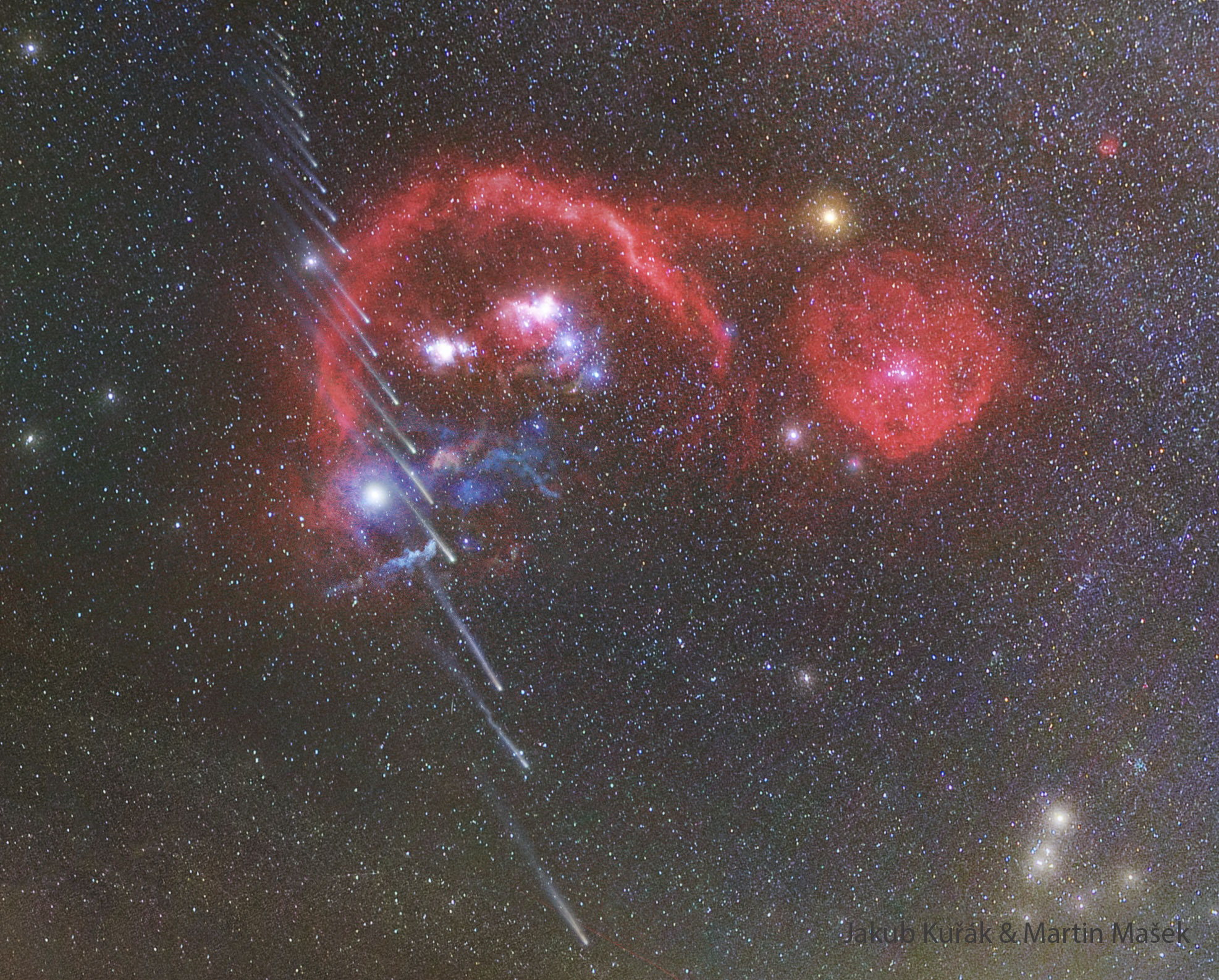
Credit: Not provided
What happens to a comet as it leaves our inner Solar System? Now, the arrival of a comet into the inner Solar System is typically heralded with great fanfare and high hopes that the comet will become bright and photogenic . But on the way out, the comet's nucleus is less warmed by the Sun , less gas and dust are expelled , the bright coma around the nucleus shrinks and fades, and the tail length drops off. Many comets will then return to the outer Solar System and only return in hundreds or thousands of years. In contrast, some comets -- like Comet C/2025 R3 (PanSTARRS) -- receive a gravitational kick from the planets and so will never return. Pictured, Comet R3 PanSTARRs was imaged deeply many nights in early to mid-May near Cerro Paranal in Chile . Later images appear closer to the top and clearly show the shrinking ion tail .
#APOD #Astronomy #Astrogeek #NASA #Astrophoto
https://apod.nasa.gov/apod/ap260608.html
Raw JSON
{
  "kind": 1,
  "id": "e939397170065b85fb09ad8f2c0d76788cd6f4a880d5573c5dfaa856d1dccdd8",
  "pubkey": "e85ed75286cb77475776c1007df8c4ff1c9c68eff91c3627347b065c5bf4dc78",
  "created_at": 1780891791,
  "tags": [],
  "content": "**Astronomy Picture of the Day**\n\n08 June 2026\n\n**Comet R3 PanSTARRS Through Time**\n\nImage: https://apod.nasa.gov/apod/image/2606/R3Tails_Kurak_1973.jpg\n\nCredit: Not provided\n\nWhat happens to a comet as it leaves our inner Solar System? Now, the arrival of a comet into the inner Solar System is typically heralded with great fanfare and high hopes that the comet will become bright and photogenic . But on the way out, the comet's nucleus is less warmed by the Sun , less gas and dust are expelled , the bright coma around the nucleus shrinks and fades, and the tail length drops off. Many comets will then return to the outer Solar System and only return in hundreds or thousands of years. In contrast, some comets -- like Comet C/2025 R3 (PanSTARRS) -- receive a gravitational kick from the planets and so will never return. Pictured, Comet R3 PanSTARRs was imaged deeply many nights in early to mid-May near Cerro Paranal in Chile . Later images appear closer to the top and clearly show the shrinking ion tail .\n\n#APOD #Astronomy #Astrogeek #NASA #Astrophoto\n\nhttps://apod.nasa.gov/apod/ap260608.html\n",
  "sig": "acfd971afd2fbfec14075a89682db2de40cbf23f4c21482a684ad08811298c1306e3a0f9c99a319c54666738fba27c413517c56e11b8cbbc6e4a82fc399a9e63"
}